
Habaki Blade Collar Explained | Japanese Sword Parts Guide
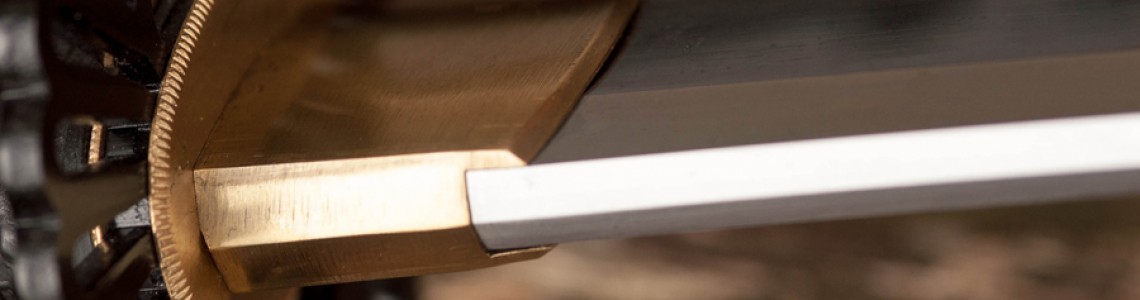
Habaki: The Important Blade Collar of a Japanese Sword
When looking at a Japanese sword, many people focus on the blade shape, hamon, or decorative fittings. However, some of the most important components are the smaller parts that provide stability and function. One of these essential parts is the Habaki (鎺).
The Habaki, also known as the blade collar, is a metal fitting installed at the base of a Japanese sword blade. Although it may appear simple, it plays a critical role in securing the blade inside the saya (scabbard), supporting the sword fittings, and maintaining the overall structure of the katana.
A well-made Japanese sword habaki is carefully fitted to each individual blade. Its precision affects the sword’s balance, safety, and the smoothness of drawing and returning the sword to the saya.
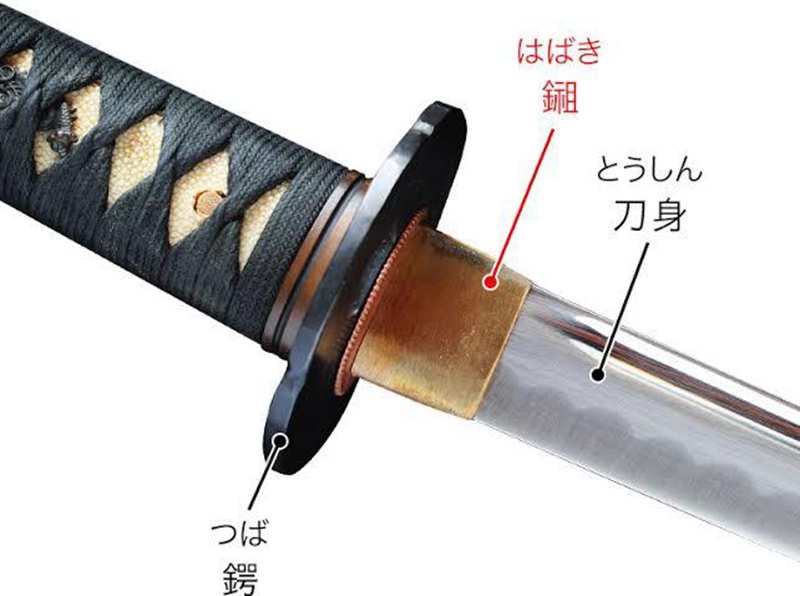
What Is a Habaki on a Japanese Sword?
A Habaki is a small metal collar that surrounds the base of a Japanese sword blade, located between the blade and the tsuba (guard). It is usually fitted over the area near the hamachi and munemachi, where the blade transitions into the tang (nakago).
The main purpose of the Habaki is to create a secure connection between the sword blade and the saya. When the sword is placed inside the scabbard, the Habaki fits tightly into the koiguchi (mouth of the saya), keeping the blade safely in position.
Unlike decorative sword fittings, the Habaki is primarily a functional component. Its design combines practical engineering with traditional Japanese sword craftsmanship.
Where Is the Habaki Located on a Katana?
The Habaki is located at the lower section of the blade, directly above the tsuba. It connects several important parts of the Japanese sword mounting system.
- Blade: The Habaki fits around the base of the blade and follows the shape of the steel.
- Tsuba: The hand guard rests against the Habaki and is supported by the surrounding fittings.
- Seppa: Metal spacers placed around the tsuba help create a tight fit between the Habaki and other fittings.
- Saya: The Habaki creates the friction fit that holds the sword securely inside the scabbard.
Because the Habaki connects the blade with the sword mounting, it is considered one of the most important parts of traditional Japanese sword construction.
The Main Functions of a Habaki
Although the Habaki is a small component, it performs several important functions that directly affect the performance and preservation of a Japanese sword.
1. Securing the Blade Inside the Saya
The most important function of the katana Habaki is keeping the blade securely inside the saya. The precise fit between the Habaki and the koiguchi creates friction that prevents the sword from falling out during carrying or movement.
A properly fitted Habaki allows the sword to remain secure while still allowing smooth drawing when needed.
2. Supporting the Sword Mounting
The Habaki also provides a stable foundation for the other sword fittings. Together with the Seppa and tsuba, it helps keep the blade and handle assembly firmly connected.
Without a correctly fitted Habaki, the sword mounting may become loose, affecting both handling and safety.
3. Protecting the Blade During Storage
The Habaki prevents the polished blade surface from directly contacting the wooden saya. This helps protect the blade from unnecessary wear and keeps the sword in better condition during long-term storage.
Different Types of Habaki Used on Japanese Swords
Traditional Japanese swords use different styles of Habaki depending on the sword type, period, and mounting style. Although the basic function remains the same, the shape and construction methods can vary greatly.
The most common distinction is between single-piece and two-piece Habaki. More elaborate examples may include decorative finishes, gold or silver coverings, and special file patterns.
| Habaki Type | Characteristics |
| Single-Piece Habaki | The most common style, made from one piece of metal and fitted directly to the blade. |
| Double Habaki (Niju Habaki) | A more complex construction using two connected pieces, often seen on higher-quality swords. |
| Decorative Habaki | Features gold foil, silver covering, engraving, or traditional file patterns. |
Materials Used for Making a Habaki
The material of a Japanese sword Habaki affects both its appearance and performance. Traditionally, soft metals are preferred because they can be shaped precisely without damaging the hardened steel blade.
Copper is the most common material because it is durable, easy to adjust, and provides a good fit around the blade. Other materials such as silver, gold, and special copper alloys are also used for high-end swords.
| Material | Features |
| Copper | The traditional and most widely used material. Easy to shape and provides excellent fitting ability. |
| Brass | Offers a golden appearance and is commonly used for modern sword fittings. |
| Silver | Used for elegant or high-end swords, often combined with decorative finishing. |
| Gold Foil | A luxurious finishing method applied over a copper base for prestigious swords. |
How Is a Habaki Made?
Making a katana Habaki requires precision and experience. Unlike mass-produced fittings, a traditional Habaki is usually created specifically for one individual blade.
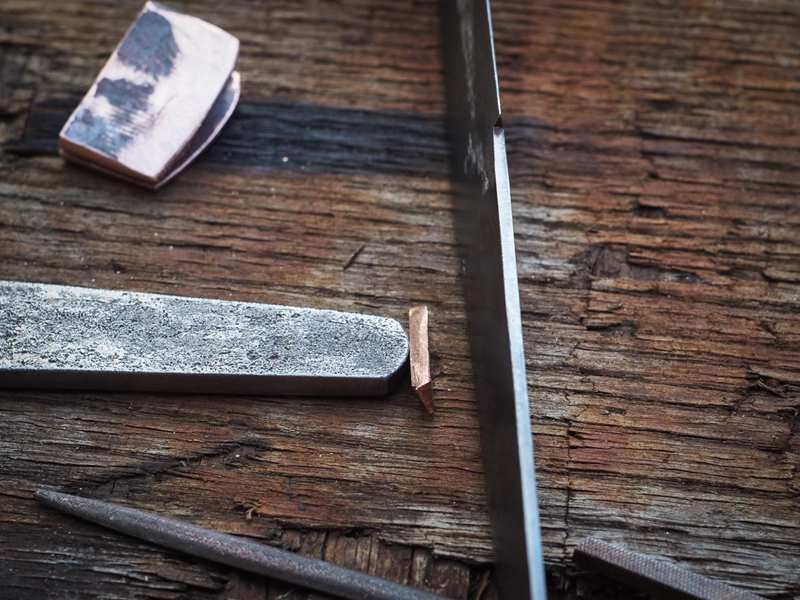
The craftsman first measures the blade shape around the machi area and prepares a metal blank. The material is then shaped, hammered, filed, and adjusted until it fits perfectly against the blade.
A properly made Habaki should hold the blade securely while allowing smooth movement when drawing and returning the sword to the saya.
Basic Steps of Habaki Construction
- Measuring: The blade dimensions are carefully checked near the base.
- Forming: The metal is shaped around the blade profile.
- Fitting: The Habaki is adjusted until it sits firmly without gaps.
- Finishing: The surface is polished or decorated according to the sword style.
Habaki vs Seppa: What Is the Difference?
Although both Habaki and Seppa are small Japanese sword fittings, they serve different purposes.
| Part | Main Function |
| Habaki | Secures the blade inside the saya and supports the sword mounting. |
| Seppa | Adjusts spacing between the tsuba and other fittings. |
Both components work together to create a stable and properly fitted Japanese sword assembly.
Signs of a High Quality Habaki
A high-quality Japanese sword Habaki is not only visually attractive but also precisely fitted to the blade. Since every sword blade has slightly different dimensions, a good Habaki requires careful adjustment and craftsmanship.
The quality of a Habaki can often be judged by its fitting accuracy, surface finish, and how smoothly the sword works with the saya and other fittings.
- Precise Blade Fit: The Habaki should sit tightly against the blade without gaps or unnecessary movement.
- Smooth Surface Finish: The metal surface should be clean, even, and carefully polished.
- Correct Alignment: The Habaki should align properly with the tsuba and sword mounting.
- Strong Construction: The material should maintain its shape and provide long-term durability.
Common Problems With Katana Habaki
Because the Habaki plays an important structural role, incorrect fitting or poor-quality construction can cause problems with a Japanese sword.
Loose Habaki
A loose Habaki may cause movement between the blade and fittings. This can affect the stability of the sword and may create unwanted vibration during handling.
Incorrect Saya Fit
If the Habaki is not correctly shaped, the sword may not fit properly inside the saya. A well-made Habaki should allow smooth drawing while securely holding the blade.
Damaged or Worn Habaki
Over time, repeated use may affect the condition of the Habaki. Regular inspection helps identify problems before they affect the sword mounting.
How to Maintain a Japanese Sword Habaki
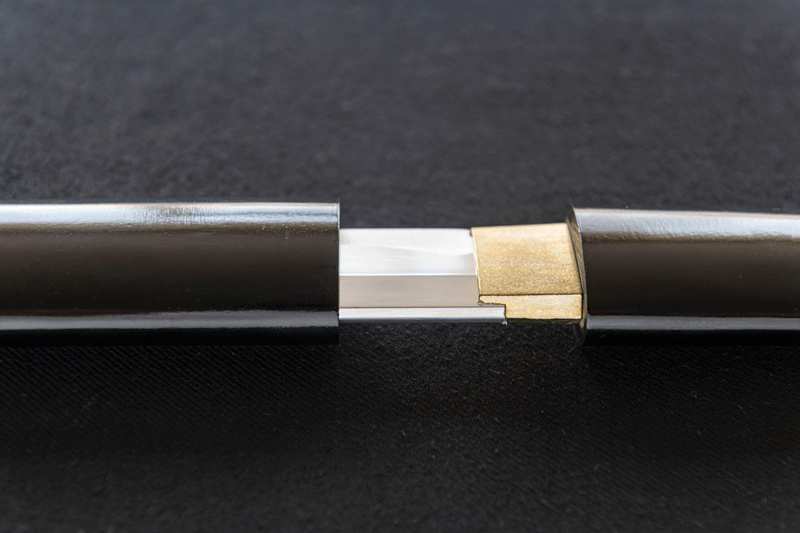
Proper maintenance helps preserve both the Habaki and the entire Japanese sword mounting. Although the Habaki is a durable metal component, it should still be cared for correctly.
- Keep the Habaki clean and dry to prevent corrosion.
- Avoid forcing the sword into the saya if the fit feels incorrect.
- Check the connection between Habaki, tsuba, and Seppa regularly.
- Use proper sword maintenance methods to protect all fittings.
Frequently Asked Questions About Habaki
What is a Habaki on a Japanese sword?
A Habaki is the metal blade collar installed at the base of a Japanese sword blade. It secures the blade inside the saya and supports the sword mounting.
What is the purpose of a Habaki?
The main purpose of a Habaki is to hold the blade securely in the scabbard, provide support for the fittings, and create a stable connection between the blade and sword mounting.
Where is the Habaki located on a katana?
The Habaki is located at the base of the blade, between the blade itself and the tsuba guard.
What material is a Habaki made from?
Traditional Habaki are commonly made from copper because it is strong, workable, and allows precise fitting. Other materials include brass, silver, and gold-covered designs.
Can a Habaki be replaced on a katana?
Yes. A Habaki can be replaced or custom-made, but it must be carefully fitted to the individual blade to ensure proper function.
What is the difference between Habaki and Seppa?
The Habaki is a blade collar that secures the sword inside the saya, while Seppa are thin spacer plates used around the tsuba to adjust fitting and alignment.
Why is Habaki important for katana quality?
A properly fitted Habaki improves the stability, safety, and overall craftsmanship of a katana. It is an essential part of traditional Japanese sword construction.
Final Thoughts
The Habaki may be a small component, but it is one of the most important parts of a Japanese sword. By securing the blade, supporting the fittings, and connecting the sword with the saya, it plays a key role in both function and preservation.
From traditional samurai swords to modern custom katana, a carefully crafted Habaki represents the precision and attention to detail found in Japanese sword making.
Understanding the purpose of the Habaki allows collectors and enthusiasts to appreciate the craftsmanship behind every part of a Japanese sword.