
How Often Should You Oil a Katana? Complete Maintenance Guide
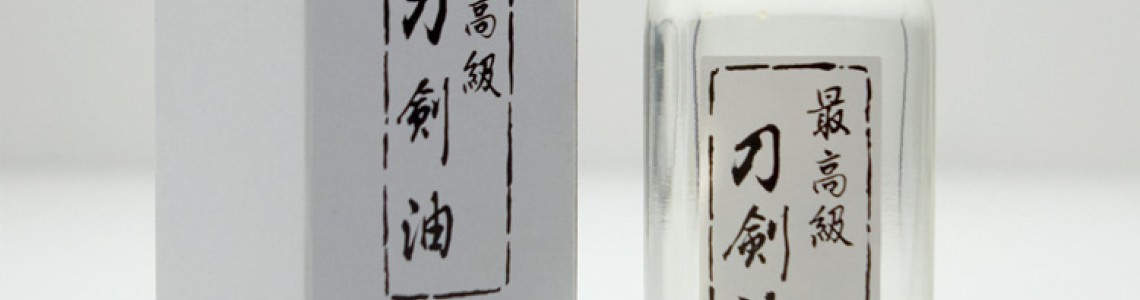
How Often Should You Oil and Maintain Your Katana? A Complete Japanese Sword Care Guide
Owning a Katana is not only about appreciating its beauty and craftsmanship. A Japanese sword, especially one made from carbon steel such as 1060, 1095, or T10 steel, requires regular maintenance to preserve its appearance, performance, and condition.
One of the most important parts of Katana maintenance is keeping the blade properly oiled. A thin layer of oil protects the steel surface from moisture and oxygen, helping prevent rust and corrosion.
Many new sword owners ask: “How often should I oil my Katana?” The answer depends on several factors, including how often the sword is used, the storage environment, humidity level, and whether the blade is handled frequently.
In this guide, we will explain the correct Katana maintenance schedule, how to oil a Japanese sword properly, and the best ways to keep your blade in excellent condition for years.
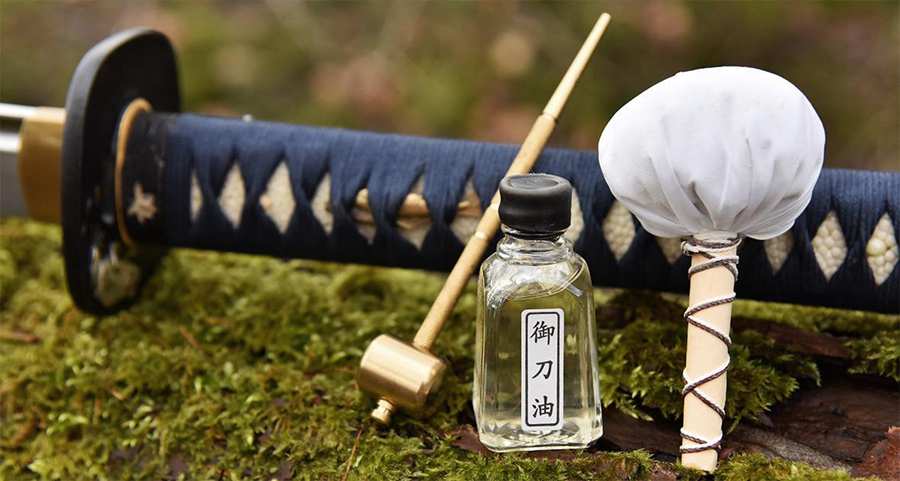
Why Does a Katana Need Regular Maintenance?
Unlike stainless steel decorative swords, traditional-style Katana are usually made from high-carbon steel. While carbon steel provides excellent hardness, sharpness, and cutting performance, it can also react with moisture and oxygen if it is not properly protected.
A small amount of moisture, fingerprints, or humidity can gradually cause oxidation on the blade surface. Regular cleaning and oiling create a protective barrier that reduces the chance of rust forming.
Proper Katana maintenance helps to:
- Prevent Rust: Oil protects the blade from moisture and environmental exposure.
- Preserve Blade Appearance: Proper care keeps the polished surface and hamon pattern looking clear.
- Maintain Sword Value: A well-maintained Katana keeps better condition and collector value.
- Improve Safety: Regular inspection helps identify loose fittings or potential problems early.
A few minutes of maintenance can protect your Katana from long-term damage and help preserve the craftsmanship behind the sword.
How Often Should You Oil a Katana?
There is no single maintenance schedule that works for every Katana owner. The correct oiling frequency depends on how the sword is used and where it is stored.
For a Katana that is only displayed and stored in a dry environment, applying fresh oil approximately every 2–3 months is usually sufficient. However, swords stored in humid areas may require more frequent inspection and oiling.
A simple maintenance rule is:
- Display Only Katana: Check the blade every month and re-oil every 2–3 months.
- Frequently Handled Katana: Clean and re-oil after handling the bare blade.
- Training Katana: Inspect and maintain regularly depending on usage.
- Cutting Katana: Clean and oil immediately after each cutting session.
The most important thing is not applying a large amount of oil, but maintaining a thin and even protective layer on the blade surface.
Katana Maintenance Schedule Based on Usage
| Usage Type | Recommended Maintenance |
| Display Katana | Inspect regularly and oil every 2–3 months |
| Occasionally Handled Katana | Wipe fingerprints and apply oil after handling |
| Training Katana | Clean and oil regularly depending on frequency of use |
| Cutting Katana | Clean and oil immediately after every cutting session |
Users who practice tameshigiri should pay special attention to maintenance. Cutting targets can introduce moisture and residue onto the blade, so the sword should be cleaned and re-oiled immediately after use.
Maintaining a Display Katana
Many Katana owners purchase swords mainly for collection or display. Even if the blade is never used for cutting, maintenance is still necessary.
A display Katana can still be affected by:
- Humidity changes in the room
- Dust accumulation
- Fingerprints from handling
- Long periods without inspection
For long-term display, check the blade condition regularly and ensure the protective oil layer remains even. Avoid storing the sword in places with excessive moisture, direct sunlight, or large temperature changes.
How to Maintain a Katana After Cutting Practice
A functional Katana used for cutting practice requires more frequent maintenance than a display sword. During tameshigiri (cutting practice), the blade may come into contact with moisture, target material residue, or small particles that can affect the steel surface.
After every cutting session, the Katana should be cleaned, inspected, and protected with a thin layer of oil. Leaving residue on a carbon steel blade for an extended period can increase the risk of corrosion.
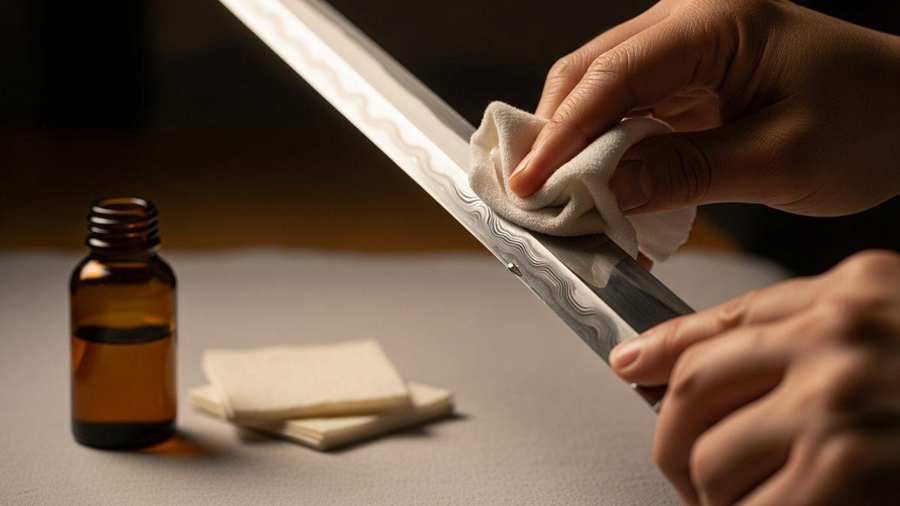
Recommended maintenance after cutting:
- Step 1: Carefully remove any visible residue from the blade surface.
- Step 2: Wipe the blade using a clean soft cloth.
- Step 3: Apply a thin and even layer of sword oil.
- Step 4: Check the edge, fittings, and handle condition before storage.
Regular maintenance after use helps preserve the sharp edge, polish, and overall condition of a functional Katana.
How to Oil a Katana Correctly
Applying oil to a Katana is simple, but it should be done carefully. Too little oil may not provide enough protection, while excessive oil can attract dust and collect inside the saya (scabbard).
Follow these steps for proper Katana oiling:
1. Remove Old Oil and Dirt
Use a clean microfiber cloth to gently remove the existing oil layer, fingerprints, and dust from the blade. Always wipe carefully along the length of the blade.
2. Apply a Small Amount of Oil
Place a few drops of sword oil onto a soft cloth and spread a very thin layer over the entire steel surface. The blade should look slightly protected, not wet or dripping.
3. Inspect the Blade Before Storage
Before placing the Katana back into the saya, check for fingerprints, moisture, scratches, or unusual marks that may require attention.
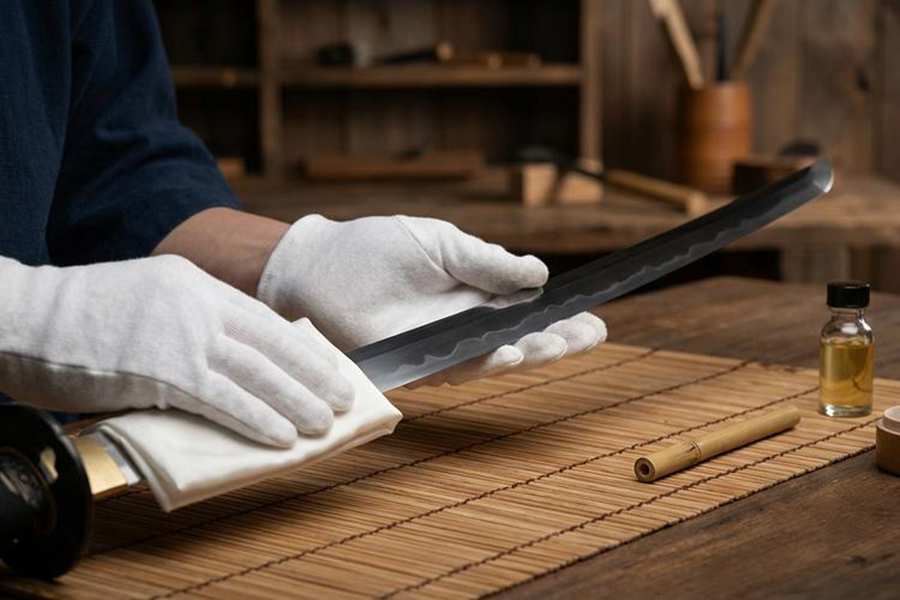
What Oil Should You Use for a Katana?
Choosing the correct oil is an important part of Japanese sword maintenance. Traditional sword owners often use choji oil, while modern collectors may also use high-quality mineral-based sword oils.
A good Katana oil should:
- Provide rust protection for carbon steel blades.
- Remain stable during long-term storage.
- Avoid damaging the blade surface or fittings.
- Be easy to apply and remove.
| Oil Type | Advantages | Recommended Use |
| Choji Oil | Traditional Japanese sword maintenance oil | Collectors and traditional Katana care |
| Mineral Sword Oil | Long-lasting protection and easy application | General Katana maintenance |
Avoid using household oils that may contain additives or chemicals unsuitable for long-term sword storage.
Common Katana Maintenance Mistakes to Avoid
Many Katana problems are caused by incorrect maintenance habits rather than normal aging. Avoiding common mistakes can significantly extend the life of your sword.
Using Too Much Oil
A thick layer of oil does not provide extra protection. Excess oil can collect dust and may flow into the inside of the saya.
Touching the Blade With Bare Hands
Fingerprints contain natural oils and moisture that can leave marks on carbon steel. Always handle the blade carefully and clean it after accidental contact.
Ignoring Humidity
A Katana stored in a humid environment requires more frequent inspection. Climate conditions play an important role in preventing rust.
Storing a Dirty Blade
Never place a Katana back into storage without cleaning it after use. Small amounts of moisture or residue can become long-term problems.
How to Store a Katana Properly
Proper storage is just as important as regular oiling. A well-maintained Katana should be stored in a safe, dry environment away from excessive humidity and temperature changes.
Recommended storage practices:
- Keep the Katana inside the saya when not being displayed.
- Store horizontally when possible to help protect the blade.
- Avoid direct sunlight and damp areas.
- Inspect the blade regularly even during long-term storage.
With proper storage and maintenance, a quality carbon steel Katana can remain beautiful and functional for many years.
Frequently Asked Questions About Katana Maintenance
1. How often should I oil my Katana?
For a display Katana stored in a dry environment, applying oil every 2–3 months is usually enough. However, if the sword is frequently handled, used for training, or stored in a humid area, it should be inspected and maintained more often.
2. Should I oil my Katana after every use?
Yes. If you use your Katana for cutting practice or handle the bare blade, it is recommended to clean and oil it after each use. Fingerprints and moisture can quickly affect carbon steel blades.
3. What happens if I do not oil my Katana?
Without proper maintenance, a carbon steel Katana can develop rust or corrosion. Over time, rust may damage the blade surface, reduce appearance, and affect the value of the sword.
4. Can I use WD-40 to maintain my Katana?
WD-40 is designed mainly as a water displacement product and is not recommended as a long-term sword storage oil. A dedicated sword oil or mineral-based protective oil is a better choice for Katana maintenance.
5. What is the best oil for a Japanese Katana?
Traditional choji oil and high-quality mineral sword oils are commonly used for Japanese sword care. The most important factor is applying a thin, even protective layer that prevents moisture exposure.
6. How do I remove fingerprints from a Katana blade?
Use a clean soft cloth to gently wipe the blade surface and remove fingerprints. After cleaning, apply a thin layer of protective oil before returning the Katana to storage.
7. Does a stainless steel Katana need oiling?
Stainless steel is more resistant to corrosion, but regular care is still recommended. Carbon steel Katana require more attention because they are more vulnerable to moisture and rust.
8. How can I prevent rust on my carbon steel Katana?
The best way to prevent rust is regular inspection, proper cleaning, applying protective oil, and storing the Katana in a dry environment.
Final Thoughts: Proper Maintenance Keeps Your Katana Beautiful
A Katana is more than just a sword. It represents traditional craftsmanship, history, and the dedication of the sword maker. Proper maintenance allows owners to preserve both the beauty and performance of their Japanese sword.
For most carbon steel Katana, regular oiling every few months, careful handling, and proper storage are enough to keep the blade in excellent condition. Functional swords used for cutting require more frequent cleaning and maintenance after every session.
Whether you own a 1060 steel Katana, 1095 steel Katana, or premium T10 steel Katana, consistent care is the key to protecting your investment.
By following the correct Katana maintenance routine, your sword can remain a beautiful piece of Japanese craftsmanship for many years.
Recommended Katana Care Checklist
| Maintenance Task | Recommended Frequency |
| Inspect blade condition | Monthly |
| Apply protective oil | Every 2–3 months or when needed |
| Clean after handling | Immediately after touching the blade |
| Clean after cutting practice | After every cutting session |